
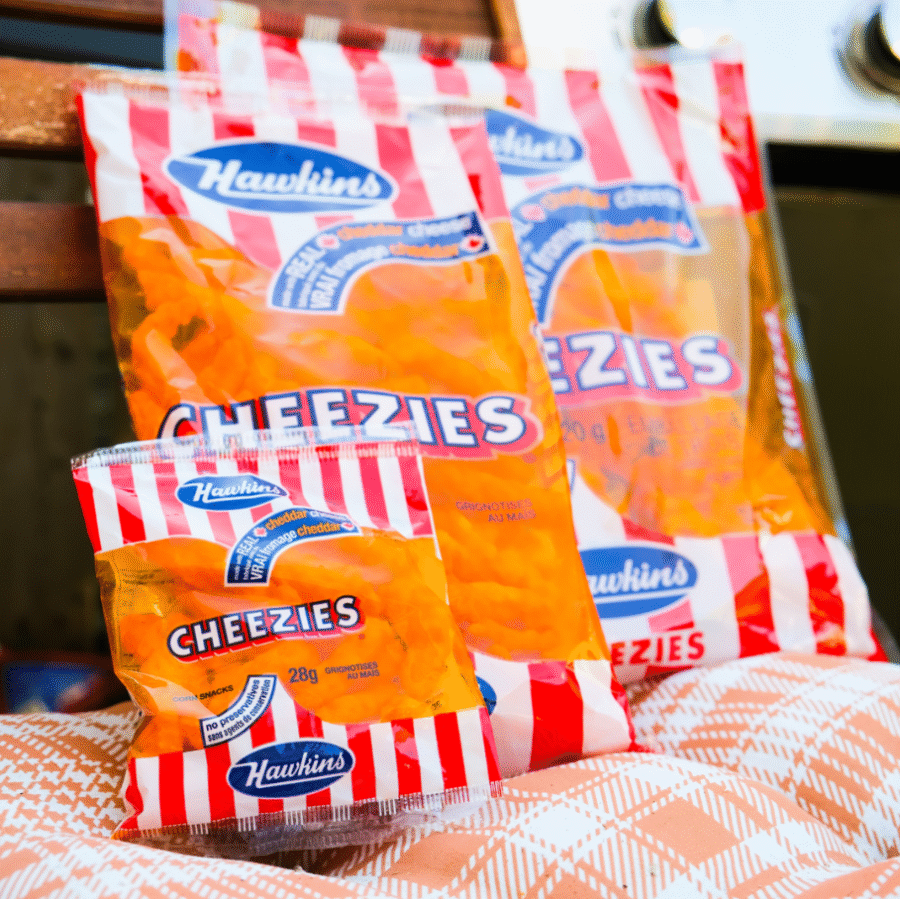
So, while taking a Pomodoro break from work, I had a thought about Hawkins Cheezies (the Canadian version of Cheetos) and why the heck they were so addicting for me, my eight-year-old and for most people I know.
As a person who is very much into health and fitness, and for the most part I have done my best to lead a very healthy lifestyle, I found it embarrassingly odd that my kryptonite, come end of day, was Hawkins Cheezies.
Yes. You read it right. Hawkins Cheezies!!
If you are Canadian, you know what I am talking about. How could you ever miss these snacks perched conveniently next the checkout counter or in the snack aisle, in their red and white packaging (which is very Canadian by the way) with blue lettering. The very radiant “violet-orange” colour of the textured Cheezies beckoning you from their little see through packaging windows. Calling you telepathically to come by and take a look, like snack food Sirens of the modern world.
“Oh, who me? Are you calling me to come pick you up and take you home? Oh no I, I , I couldn’t. What would the Ketchup Chips and Doritos say? Oh, what the heck! THEY don’t have “real cheese” in them now do they.”
Yes, THOSE Cheezies!
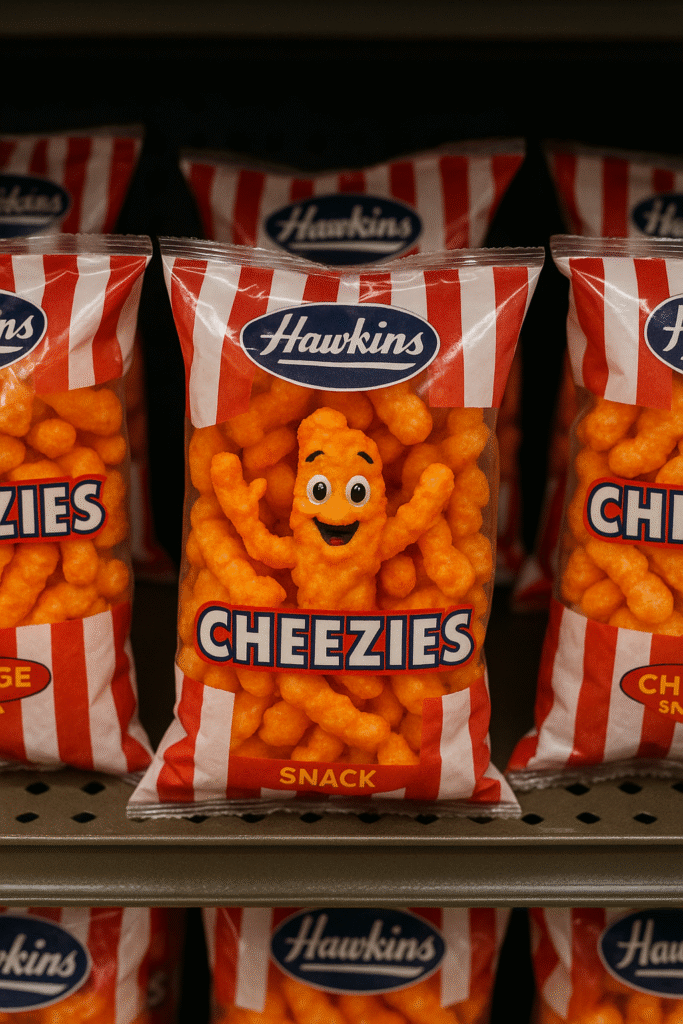
God knows how long I have been trying to kick the Hawkins Cheezie habit ever since late last year when I made the mistake of seeing them in my local supermarket with my son, who asked about them. Me, thinking it was a good idea to let him try something that I used to like, decided to break my 20-year stretch of Cheezie abstinence, and take a small pack home. I mean they weren’t that addicting right?
WRONG!!
It has now taken me and my son, living somewhere outside of Canada for a month, where there are no Hawkins Cheezies, to say that we have stopped eating them. But why?
What is it with the Hawkins Cheezies, and similarly Cheetos or other brands of Cheezies, that makes me fold and give in to buying more to satisfy that need to eat, and not just one, but at least a small snack bag.
So, me being me, with my easily distracted mind, what should have been a 5-minute Pomodoro break has turned into a small research session of several minutes with my newly found friend, ChatGPT.
Yup that’s right. I engaged the help of AI to dive in deep into why those bright violet-orange elongated clumps of cornmeal, have weakened my resolve and keep interfering with my goals of eating better and healthier. For context, I have changed my eating habits over the past year to exclude added sugars, grains, additives, unhealthy fats, etc., and went from about 22% body fat to my lowest of 13% (an article on this is forthcoming), but the darn Cheezies is the only unhealthy thing that I found very hard to kick.
What I got from ChatGPT was quite interesting. I knew from before that Food Scientists engineer foods so that we love the taste and what to eat more again and again. It is all about increasing the sales. It is why, if you look at most packaged food, they have added sugars in them, because sugar make us feel good and it is addictive.
But Hawkins Cheezies has no added sugar. And when you look at the ingredients list on the packaging, the list of ingredients does not seem that bad compared to some other snacks I have seen. And this is where I started to wonder, what is in there that makes it addictive.
. . .

SUMMARY OF WHY SO ADDICTIVE:
Essentially the addictive nature of Hawkins Cheezies is due to the combination of the fat, salt, cheese seasoning, and texture, which creates an optimal “eating experience”. This triggers our brains’ reward systems. Dopamine is released when we eat this snack causing us to associate feeling good when we eat it, ultimately leading to cravings and wanting more when we stop eating it. If this is then paired with psychological triggers like convenience or as in my case, I now associate the habit of eating Cheezies at the end of a day as my relaxation routine, then you further increase the addictiveness of the Hawkins Cheezies.
And this is the same for all processed snacks out there like Cheetos, Doritos, Potato Chips, etc. Hawkins Cheezies in not unique in their engineered food formula, and this similarly happens for other types of processed foods, not just the snacks.
. . .
DETAILS OF THE ADDICTIVE PROPERTIES:
The addictive quality of snacks like Hawkins Cheezies or Cheetos can be attributed to a combination of factors related to their ingredients and how our brain reacts to them. Specifically, here are the list of main contributors:
- Fat and Salt
- Flavor Enhancers (like Monosodium Glutamate – MSG)
- Texture and Mouthfeel
- Carbohydrates and Sugar
- Psychological Factors
Now Hawkins Cheezies does not contain MSG or any additives chemically similar to MSG. Its make up relies on the natural “umami” flavours from the cheese seasoning, but it is still addictive, and this addictiveness can be attributed to a combination of factors that target both the biological and psychological aspects of eating. Let’s break this down:
1. Fat Content and Flavor Fatigue
Fat: Hawkins Cheezies contain hydrogenated vegetable oil, which is high in fat. Foods high in fat trigger the dopamine system in the brain, providing a sense of pleasure and reward. The body naturally seeks energy-dense foods, which are often high in fat, as a survival mechanism. The melting texture of Cheezies also creates a pleasant mouthfeel that makes them feel indulgent, encouraging you to continue eating.
Flavor Fatigue: The combination of fats and salt can lead to flavor fatigue, which is when the initial richness of the taste wears off, but the body still craves the texture and mouthfeel. This makes you keep eating to seek that “crunch” sensation, even though the flavor isn’t as intense after the first few bites.
2. Salt
Salt is another key ingredient that plays a big role in making Hawkins Cheezies addictive. It is well-known that salt stimulates dopamine release in the brain. This chemical signal makes us feel rewarded with each bite.
Additionally, salt can act as a preservative in the snack, contributing to its long shelf life while also keeping us coming back for more. The salty flavor is one of the most commonly craved tastes, and in combination with the fat, it makes for a powerful eating experience.
3. Cheese Seasoning and Umami
Hawkins Cheezies rely heavily on the flavor from their aged cheddar cheese seasoning. Cheese naturally contains glutamates, which provide an umami flavor. While this is not the same as MSG, glutamates in natural cheese can activate similar pathways in the brain, signaling a satisfying experience that leaves you craving more.
The umami taste has been shown to stimulate appetite, and since Cheezies have a cheesy flavor profile, your brain starts associating them with satisfaction, driving you to eat more.
4. Texture and Mouthfeel
The crispy texture of Hawkins Cheezies plays a major role in their addictive nature. The snack is designed to melt in your mouth, offering an experience that is both satisfying and pleasurable. This lightness in texture creates a feeling of indulgence while also allowing you to consume more without feeling overly full.
The crunch is also a form of sensory stimulation, which can trigger a response in your brain’s reward system. As you keep eating, the sound of crunching becomes linked with enjoyment, and you find yourself reaching for more.
5. Portion Control and Serving Size
Hawkins Cheezies are typically packaged in ways that encourage mindless eating. The small, bite-sized pieces mean you can easily eat a larger portion before feeling full. The lack of “heaviness” in the snack makes it easier to consume large amounts without a sense of being satiated.
These snacks also often come in large bags, which can create a feeling of scarcity that prompts you to eat more until the bag is finished, contributing to overeating.
6. Psychological Triggers
Cultural Influence: Many people associate snacks like Hawkins Cheezies with comfort food or nostalgia from childhood, which can make them more emotionally satisfying to eat. This emotional connection adds a layer of psychological reinforcement, making you reach for the snack even when you’re not hungry.
Convenience: The snack is ready-to-eat and portable. This convenience means it is often consumed when people are distracted (e.g., while watching TV), which leads to mindless eating. This automatic consumption is often paired with the pleasurable sensations of taste and texture, creating a cycle of wanting more.
7. Energy Boost from Carbs
Hawkins Cheezies contain carbohydrates (from corn meal), which are quickly broken down into glucose. This provides a short-term energy boost, making the snack appealing when you need a quick pick-me-up. The instant gratification of energy release often leads to continued eating, as the body craves more of the boost.
. . .
Well, there you have it. The reason why you just can’t resist those, Cheezies. Who would have thought that a 5-minute Pomodoro break would have resulted in my journey down the food science rabbit hole and you being educated on why resistance to Hawkins Cheezies or any processed snack food, is almost futile because it is purposely designed to be addictive.
But we are not doomed to be slaves to the science of the food industry. I believe that knowledge is power, and the more that you know then the more equipped you are to make better choices and changes to your lifestyle. One big step is start looking at food labels and start avoiding foods with added sugars and chemical preservatives. Another step is questioning your relationship with food. In my case, I have some work to do as my end of day relaxation routine, has been eating a salty snack and now I have this association or habit that I have formed that I need to break. Knowing this has given me back some control where when I have a craving I now question why and am better able to resist. It is a work in progress.